
Blogs
Explore creative blogs shared by our community.
Filter by Category:
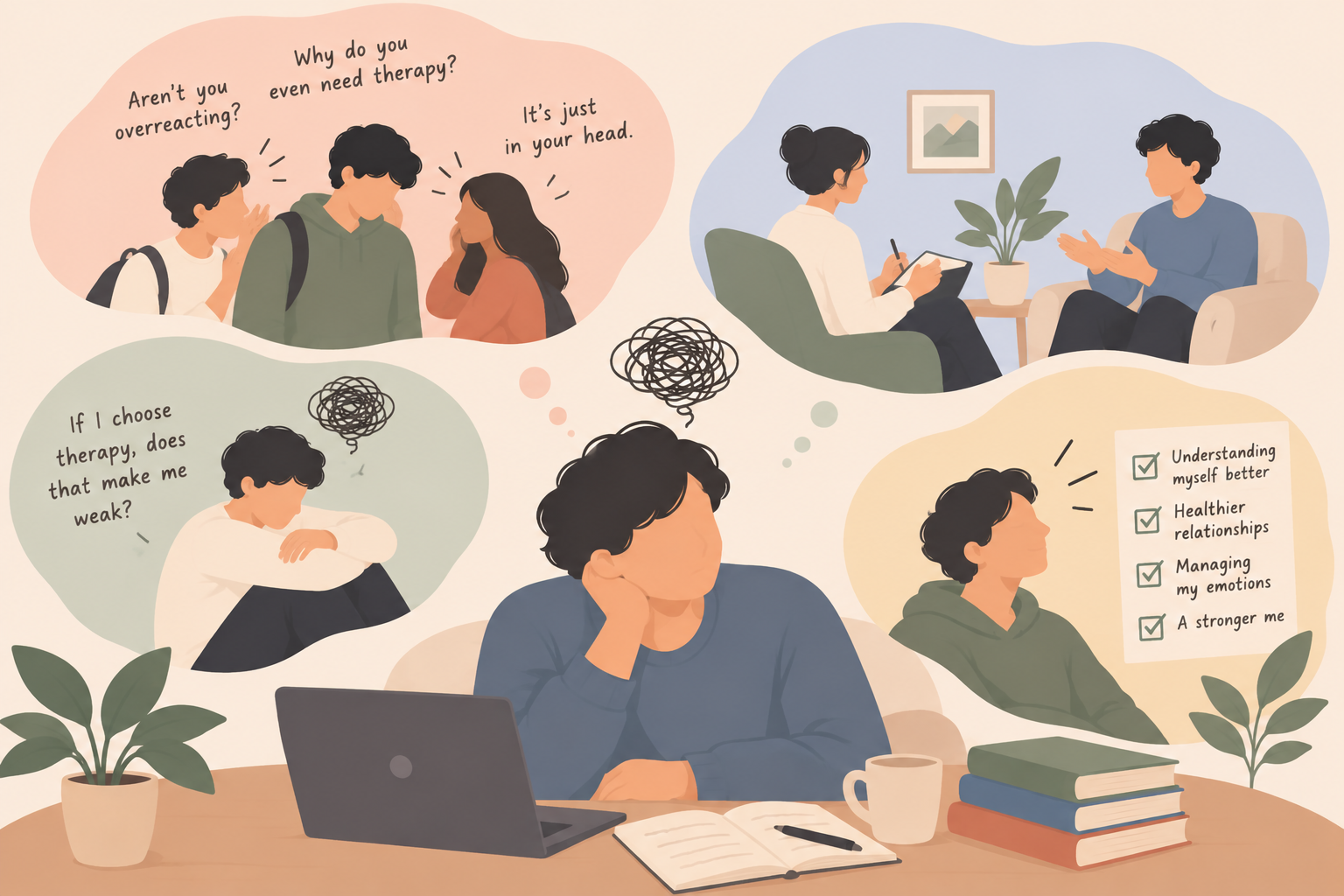
Does Choosing Therapy Make You Weak?
By User 2102
Oct 17, 2026
There is a common belief that seeking therapy means you are unable to handle your personal problems, but no, sharing your thoughts/beliefs is never a sign of weakness. But it actually requires strength and courage to acknowledge the need for a listening ear, which is never a sign of weakness. Therapy works for everyone; it exists for everyone. It is simply two people trying to understand each other's thoughts and them trying to help you out. Why do we think asking for help is a sign of weakness? From a young age, we are taught to be independent; we are often told to stay strong, not to cry, hide our insecurities, and solve our problems on our own. This foundation of an independent self leads to a misconception that therapy is only for people who are experiencing severe mental health problems. And we are strong enough to cope with every problem. Being strong should not come with a cost, a cost of feeling like you are draining yourself. But it can be for anyone, for multiple reasons, like academic pressure, family issues, stress, loneliness, relationship concerns, loss of a loved one, or simply feeling overwhelmed. Choosing this step simply means that you are recognizing that something is affecting you and that you want to take action rather than ignore it but rather work on it. Therapy is a choice, not a measure of strength, so here's what you need to know: Myths and facts Therapy is not only for people dealing with serious issues or crises. It can also be for anyone who wants personal growth and self-awareness. Finding the right counsellor matters. Different counsellors use different ways; none of them is necessarily wrong or right. But the counsellors you choose should provide you with support, and you should feel comfortable with them. You should feel comfortable telling them your truths, insecurities, fears, and your reality. You don't have to tell everything. Counsellors do not need to know everything. You don't have to tell them the entire story or your entire past, but you should tell them what you are struggling with and what you want them to know about you. Choosing therapy is not about admitting that you cannot handle life on your own. Sometimes, it is simply about recognizing that you do not have to handle everything alone.
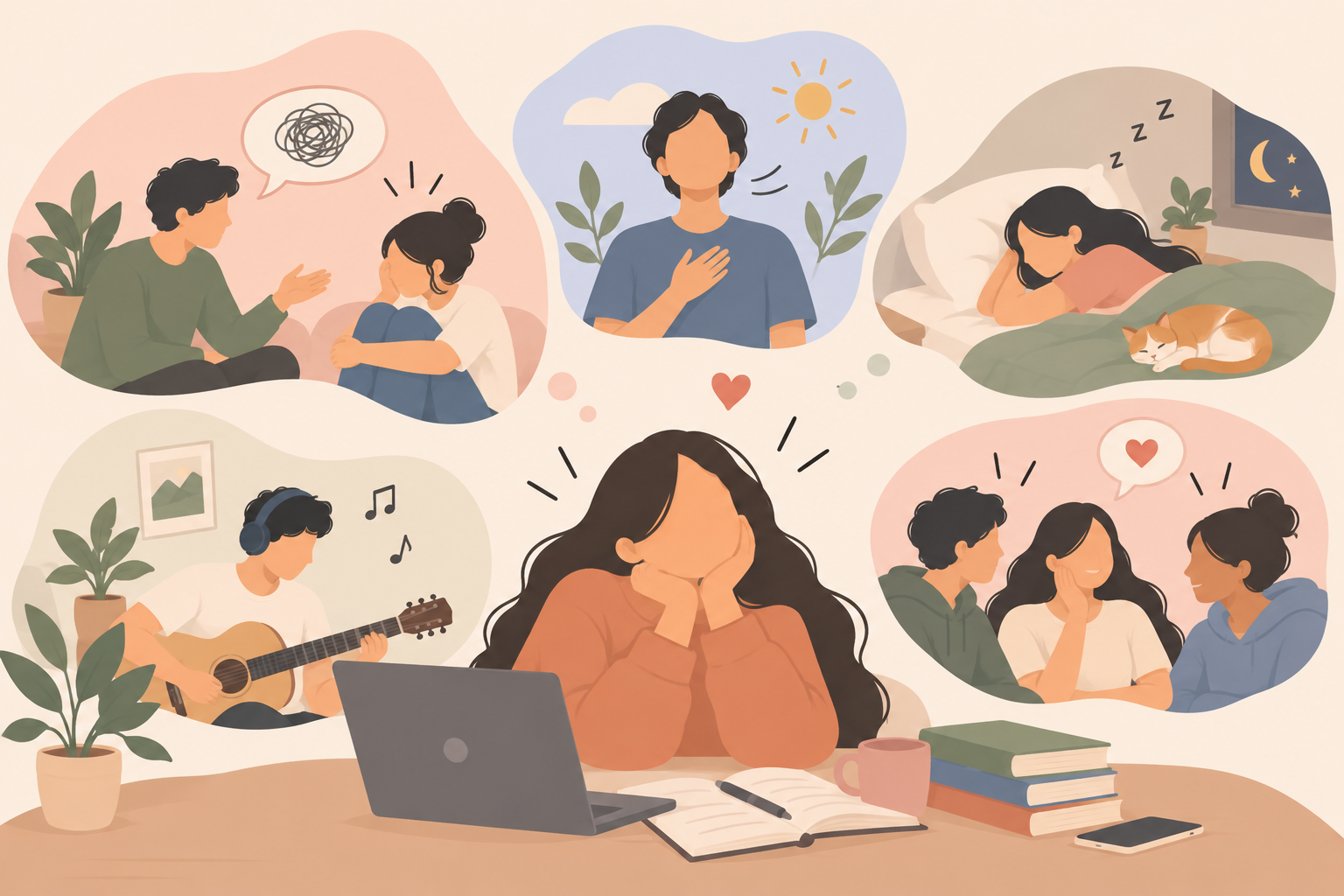
Mental Health Matters
By User 2102
Oct 17, 2026
There is a moment at night or a moment in the day when everything is finally quiet and your brain decides it’s the perfect time to talk, so you think and talk, which goes beyond questions and conclusions. We think the measure of health is done by seeing physical health by eating well, staying active, or visiting a doctor when something doesn't feel right. But what about our mental health? Our thoughts, actions, emotions, and experiences are an important part of who we are and how we present ourselves. Yet, mental health is often overlooked until it begins to affect our everyday lives. Taking care of your mental well-being should be a priority; you should not wait until you are struggling. It’s necessary, like your physical well-being. What Exactly Is Mental Health? Mental health refers to our emotional, psychological and social well-being. It affects how we think, feel and behave; how we handle stress; how we build relationships, and how we respond to our surroundings. Think of it like a tree, with its roots, trunk, branches, leaves, and fruits. Some might think the fruit is precious; some might think the wood is. But no part can be ignored; every part has its own importance, exactly like your well-being. Having good mental health does not mean feeling happy all the time. Experiencing and expressing every emotion is necessary; whether it's sadness, anger, stress, loneliness or disappointment, they are important for an individual. These feelings are a normal part of life. But it is about being able to recognise and manage our emotions, cope with challenges and continue to engage with people. Just like our physical health changes our mental health, which can change too depending on the situations. And that is completely normal. You Don't Have to Be Unwell to Care About Your Mental Well-Being Mental health care is not only for people experiencing a mental illness. You do not need to wait until you feel completely overwhelmed or empty. Your mental well-being does not need to be cared for only when you are at your lowest. Just as physical health is maintained through exercise, mental well-being can be supported through healthy habits. Habits such as taking a break when you feel exhausted, talking to someone trusted, setting healthy boundaries, spending time doing things you enjoy, meditating—not only by sitting quietly, but also by doing any activity you enjoy and giving yourself time to process your emotions—are all ways of caring for your mental health. And to always make sure to ask yourself, “How am I really doing?” can be a simple but meaningful first step. Breaking the Stigma Around Mental Health People hesitate to talk about their struggles because they fear being judged, misunderstood or labelled. They try to hide their insecurities. Some people believe that asking for help means they are weak or unable to handle their own problems. Others may feel that their problems are not “serious enough” to deserve support. But seeking support is not a failure. It’s not something serious, and it’s not a big deal. Recognising that you are having a difficult time and being willing to talk about is an important act of self-care. These conversations should not be limited to moments of crisis. Asking for Help Is a Sign of Self-Care There is no right time to care about your mental health. Whether you are going through a breakdown or simply want to understand yourself better, talking to a counsellor can provide a safe space to express your thoughts and feelings. Mental health is not something we should think about only when something goes wrong. It is a part of our everyday well-being and deserves the same attention, care and understanding as our physical health. Your mental health matters — not because something is wrong with you, but because you matter.
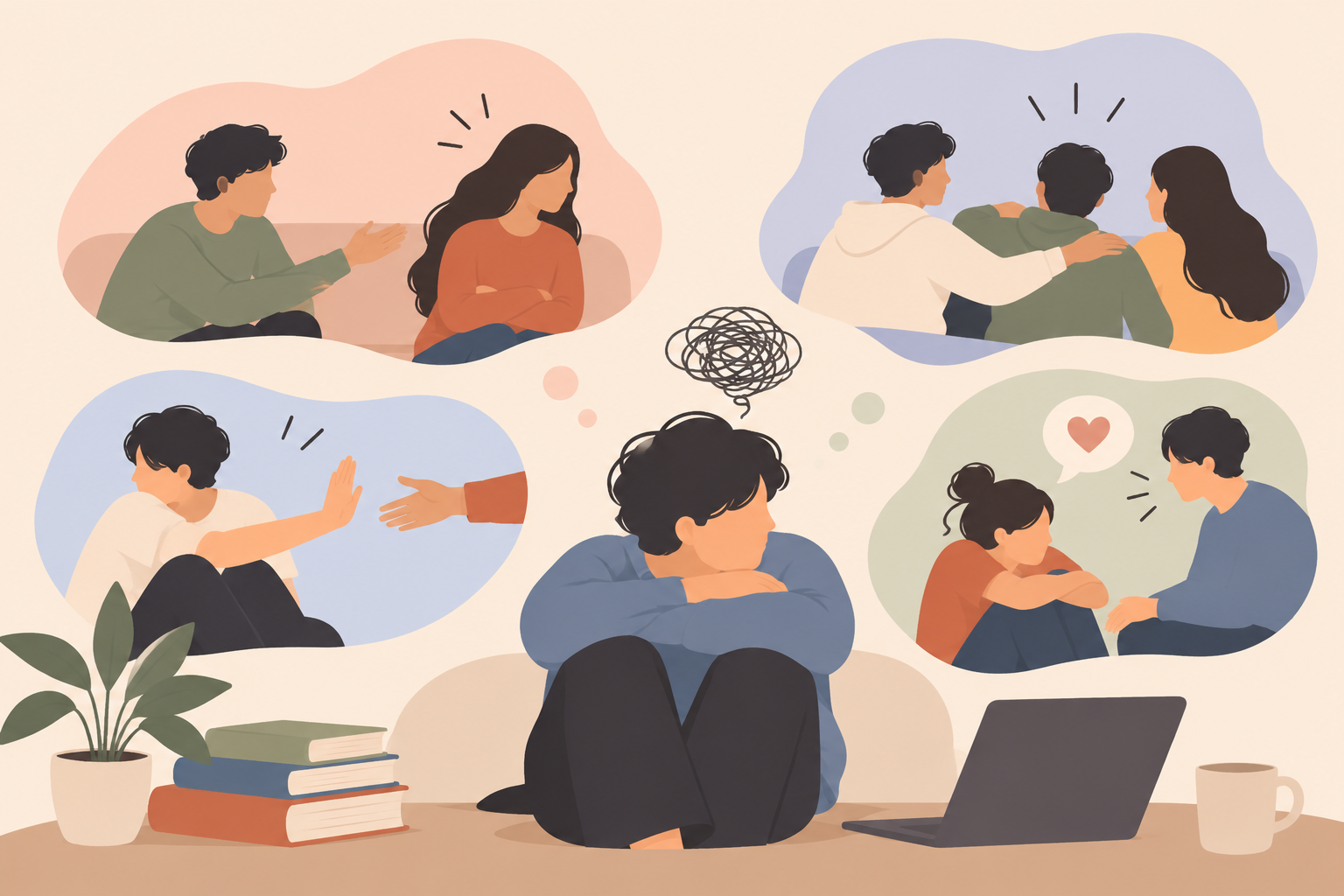
Why We Push People Away?
By Nidhi Sharma
Oct 17, 2026
It’s strange that we sometimes push our loved ones away just when we need them the most. Isn't it like throwing away a flashlight while walking through a dark tunnel? Or leaving your umbrella behind when it's pouring outside? Sounds weird, right? But it's something many of us do without even realising it. So, why do we do this? Why do we isolate ourselves during difficult times? There could be various reasons, such as,Not wanting to be a burden on the people we love. Sometimes, we push people away because we don’t want to trouble them or become a burden on them.Scared of being misunderstood. We worry that people might judge us or minimise our problems.Not being able to explain ourselves. When we are already in a vulnerable spot, expressing and explaining ourselves becomes even more difficult.Wanting to deal with everything alone. We might think that dealing with things alone makes things easier.Or simply not wanting people to see us struggling. We might be afraid to look weak, especially in front of those who know us well. But does this really work? We distance ourselves, thinking this would help us. But in reality, it doesn’t. We continue to suffer even more. Alone. Why? Because the consequences of this create even more trouble in our lives. Distancing ourselves makes us feel lonelier because we keep everything to ourselves and deal with it internally. Also, those close to us might not understand why we’ve become distant, which can lead to further misunderstandings and disconnection in our relationships. However, distance is not bad. Sometimes, taking space can help. The problem begins when we mistake solitude for isolation and space for cutting people off from our lives. Why is it difficult to let people in? Because letting people see our vulnerable side feels harder than dealing with the problem itself. We might think opening up would change how people see us, and that opening up would invite sympathy, which we do not want. But isn’t it weird that we want people to understand us but we never actually give them the chance to? And that we always think, “What if they judge me?” “What if they change?” and not “How would opening up help?” “How do I make them understand?” It is okay to think that way. But try to consider the other aspect as well. Try to break the pattern and give others a chance. How to break this pattern? I know breaking this pattern is not as easy as it sounds. It takes a lot of courage and a long discussion with yourself, convincing yourself that “opening up will be fine”, but this is the only way to make things easier. You can also try to think positively; it’s normal to expect the worst when things are already going badly. However, you don’t have to force yourself. If you’re not comfortable opening up with someone you know or someone who knows you, you can share your problem on community forums anonymously; people there might help you. But a better way is to talk to a counsellor, because a counsellor will listen to you without judging you and will guide you to break the wall you’ve made between you and the people you love and come out of the trouble. How the Biyani Group of Colleges Makes a Difference? Biyani College understands that mental & emotional well-being is important as well. Faculty at Biyani are friendly and allow students to share what’s on their minds, and also, the College provides a safe space for students to open up and let everything that is troubling them out. As a saying goes: “When life gets hard, a good relationship should be a safe place to hide and feel protected. However, instead of running to that safe place, our first reaction is often to shut out the people who love us.” Hence, pushing people away is not the solution to our problems. You do not have to go through everything alone, and remember that sharing your problem with the right person helps because, A problem shared is a problem halved.
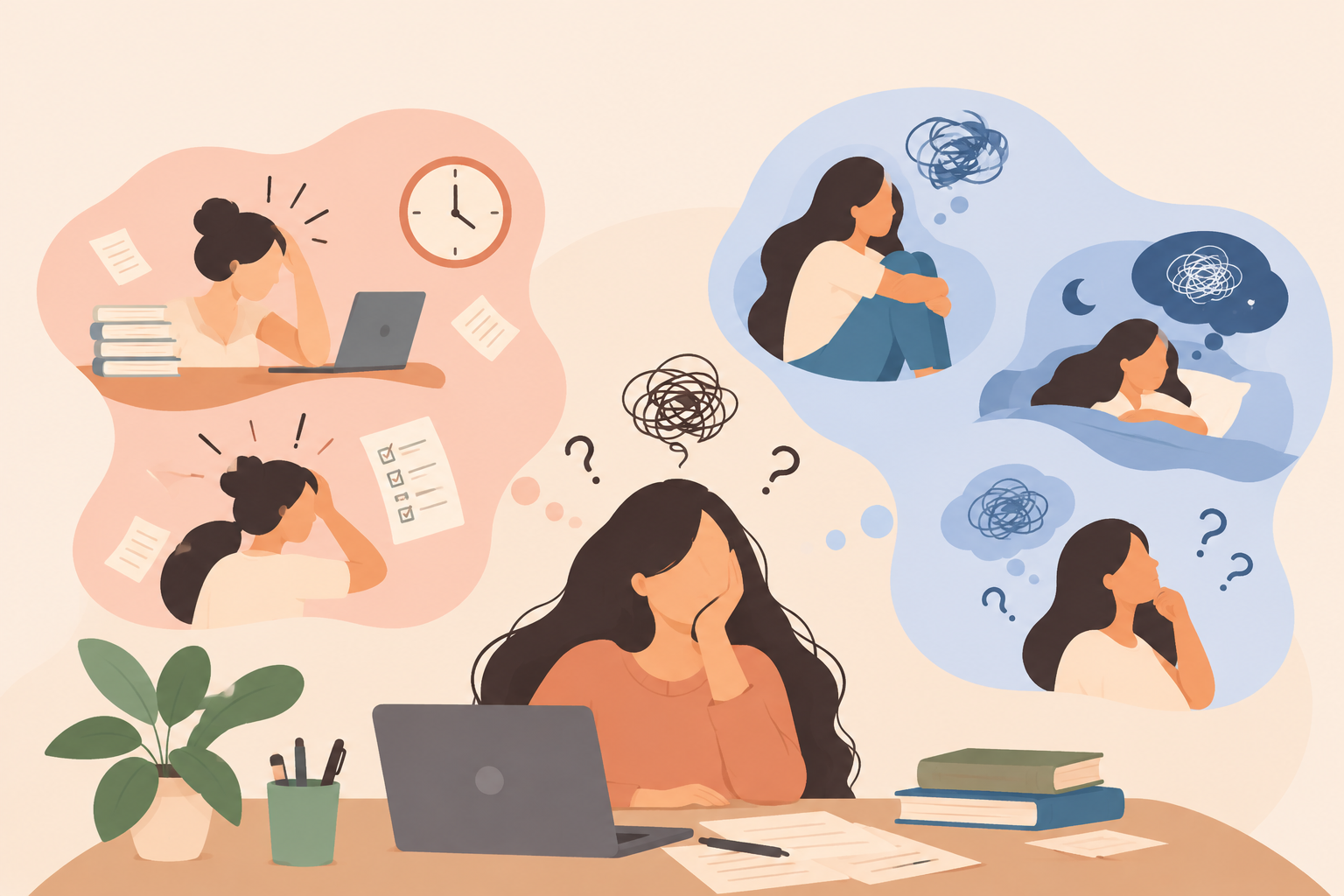
Stress vs Anxiety
By Nidhi Sharma
Oct 17, 2026
Do you also think that stress and anxiety are the same thing? You have a deadline coming up, an exam you have to study for or anything that overwhelms you, and you label it as anxiety.These days, it has become so common to consider these sensations as "anxiety." We use words like anxiousness and trauma without realising that these are medical terms and have broader meanings.But here's the thing: Stress and Anxiety may seem to be comparable, yet they're not precisely the same. And, recognising what they mean can assist you in describing your feelings much better.So, before you label every rough day as anxiety, let's understand the difference between the two.Stress vs Anxiety: What's the Difference?While both stress and anxiety share the same physical & mental symptoms, such as:Excessive sweating, digestive problems, rapid breathing, a fast heartbeat, moodiness, difficulty concentrating, etc.But the main difference is in what causes them, their duration, and the degree to which they affect your life.Cause or TriggerStress usually arises due to a specific external trigger or something that is putting pressure on you, such as an exam or a difficult life event.For example: You might be stressed due to the upcoming exam or its result.Whereas anxiety can sometimes creep in even when there is no clear or immediate stressor.For example: Everything might be perfectly fine externally, but internally you might feel a turmoil that won’t stop.How Long Does It Last?Stress is usually a short-term reaction that tends to fade away once the problem is solved or the stressor is eliminated.For example: You feel stress while working on a project that has a deadline coming up soon, but after the project is completed, you may feel relieved.On the other hand, anxiety is the persistent and excessive worry or fear that can continue even without a reason.Impact on LifeBoth stress and anxiety are emotional reactions and can significantly affect your sleep, concentration, mood, relationships, and productivity.But stress typically does not stop you from performing daily activities and work.On the other hand, anxiety is chronic, excessive worry that can make simple situations seem difficult. It can severely impact your life and make daily functions and activities difficult to perform.Which one do you think you have?Although we have discussed the major differences between the two, it is important to understand that to know whether you have anxiety or not, you should consider consulting a mental health professional.So, Should You Be Worried?See, not every stressful moment means something's wrong. Sometimes, feeling a little anxious before a big event or worried about results is normal. The crucial thing to focus on is how severe the feeling is, how long it lasts, and its impact on your life.So, if you find yourself worrying continuously or if you notice any of the physical and mental symptoms, consult a mental health professional.“Anxiety might ask for certainty, but healing often starts with support” ~Del Rae Behavioral Health.
Are We Resting or Just Scrolling?
By Nidhi Sharma
Oct 17, 2026
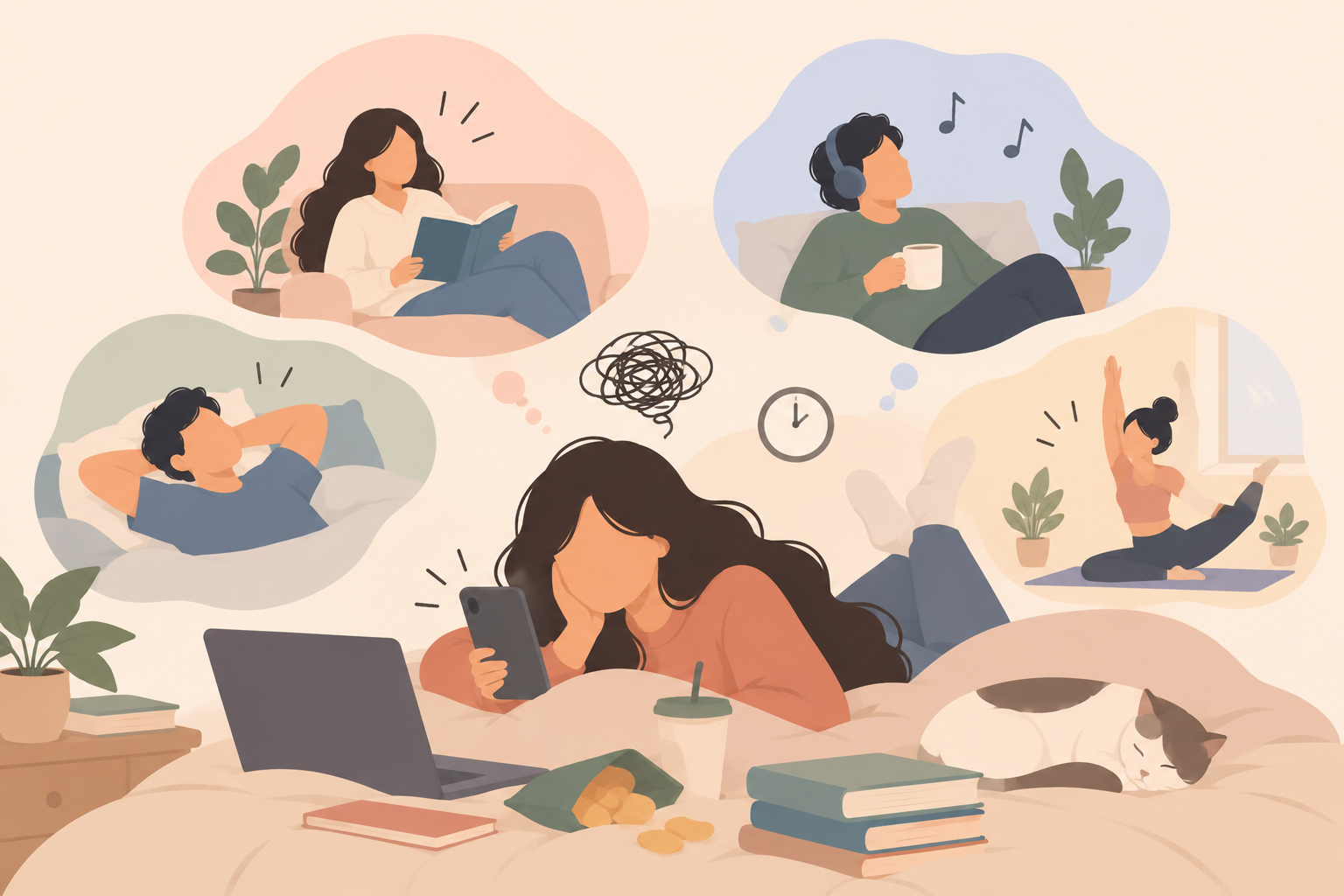
Yesterday, when I got home, I was so tired because of my classes and studies, and all I wanted to do was rest. But you know how I rested?I took out my phone and started scrolling.I knew I was tired, but I chose to doom-scroll.And I am sure that many of you do that too. In fact, most of the people around me do the same, including my parents.Why?Because we have normalised scrolling so much that we’ve almost forgotten what real rest looks like. Remember when we were kids and used to sleep or rest whenever we got tired? But then smartphones and social media came, and now every break looks like a scrolling session.But still, why do we do that?This happens for a lot of reasons:Some people do this because scrolling is easy and requires little effort.Some do this to distract themselves from stress or uncomfortable thoughts.Some do it because they are so used to checking their phones and then do it without thinking.And some do it because they want a break but don’t know what kind of break they need.In my case, I think it’s the third one.But does scrolling actually help?Well, I guess we all probably know the answer.No, it doesn’t in most cases.Taking a break is not necessarily the same as resting and relaxing.I know scrolling feels good in the moment because all we have to do is use our thumb. But after that? It leaves us feeling distracted and even more tired.However, it doesn’t mean that using a phone is inherently bad. Sometimes watching a funny video or a movie of our choice makes us feel alive after a tiring day. And talking to a friend feels enjoyable.The problem starts when scrolling becomes an automatic instinct and when doom-scrolling for hours replaces real rest.But we’ve become so accustomed to mindless scrolling that we can’t even recall what real rest looks like.So, what does it look like? There is no standard definition of real rest, but real rest should make you feel calm and relaxed; make your mind feel quiet and at peace; and, most importantly, make you feel refreshed and satisfied afterwards.Here are a few ways you can relax instead of scrolling:Go for a walkListen to musicJournalTalk to a friendSit quietly and think about lifeRead a bookOr get enough sleep when exhausted.Now,How to make our breaks more relaxing?Try to recall how we used to make our breaks memorable when we were kids. We used to first think of how much time we’ve got and then think of activities that fit our time constraints.Like playing with our friends when we had an hour, or spending a few minutes on the swings when we had only 15 minutes.We can still do the same: first, think of how long the break is, then put our phones aside and consider the options. We can also try doing different activities and notice which activity makes us feel recharged.Student Support at the Biyani Group of Colleges:Biyani has a whole bunch of activities for students to relax and enjoy college life. Like clubs for Poetry, Painting, Dancing, etc. The College also has a temple where students can feel calm, and Panchvati, a botanical garden where students can play with rabbits and ducks and spend some time in nature.So, in the end, you do not have to earn a rest. You don’t have to make every rest productive. And the goal isn’t to stop using a phone, but to use it intentionally.And remember to ask yourself a simple question:“Am I resting, or am I scrolling?”
The Cost Of Comparison
By Nidhi Sharma
Oct 17, 2026
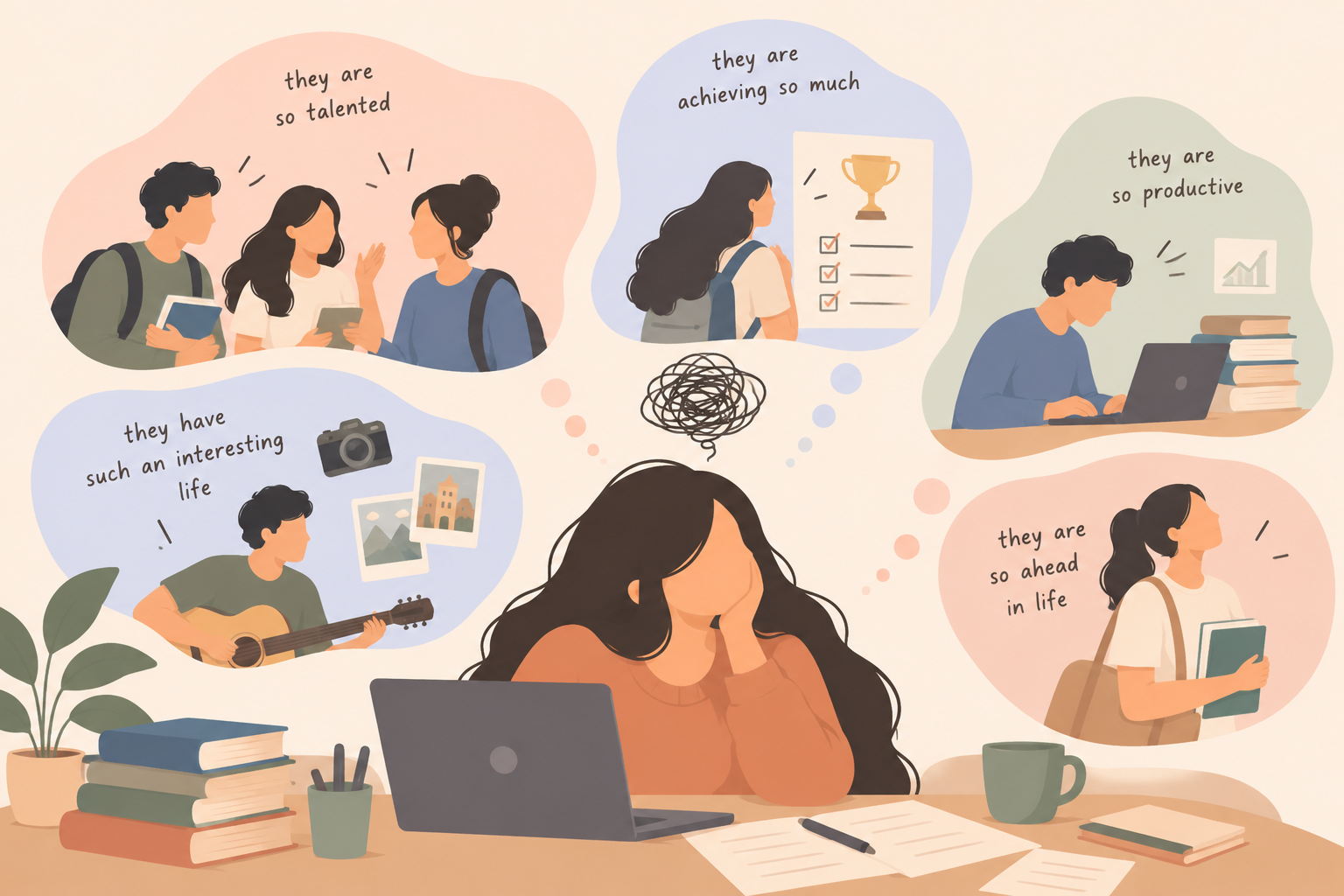
Have you ever asked yourself, “Why am I still not there yet?” “Why have I not achieved it yet?” because someone you know achieved something? And you know what comes next: the classic question, “Am I not good enough?” and a continuous loop of self-doubt and overthinking.This is a typical example of comparison and its effects.But why do we compare ourselves to others?See, comparison is an evolutionary instinct; our ancestors used to compare themselves to decide their ranks, and so do we. But slowly, this habit of comparison has become a vicious cycle.But still, the question remains: “Why do we compare ourselves?”The habit of comparison develops for various reasons, such as competition: when you realise you’re not the only one in the race; Parents: when your parents compare you with other kids; society: when everyone around you has a rank for everyone; academic pressure: the pressure to excel; and, most importantly, seeing only the achievements of others.What is the problem with comparison?The problem with comparison is that you compare your Behind-the-scenes with someone else’s Highlight reel. You do not think of their struggles and hard work, and what it took them to achieve what they have now; you only see the centre stage, the place they have achieved.First and foremost, you need to realise that everyone has their own struggles, strengths, resources, and, above all, timeline. Everything takes time, and everything has its own timeline. You can not and should not compare your day 1 with someone else’s day 100th.How does comparison affect you?Comparison affects you in ways you’ve never counted,It makes you doubt your own abilitiesCreates unnecessary pressureCan turn someone else's success into your failureMakes you focus more on competition than growthAnd takes away satisfaction from your own progress.So, you know it’s true when people say, “Comparison is a thief of joy”.Is comparison always bad?No! Not every comparison is bad. Healthy comparison can motivate you to work harder and inspire you to become better. It can also improve your productivity and efficiency. But the problem begins when it makes you feel inadequate or incapable, rather than motivated.What can you do instead?Firstly, you should not think of getting rid of the habit of comparison. Why? Because healthy comparison allows us to know how much better we have become, where we stand, and how far we have to go.Secondly, you can compare yourself to your past self; you can keep a journal to track your performance, so that every time you see someone’s success and start doubting yourself, you have a record that shows your hard work. You can learn from people instead of competing with them, and you can also limit social media comparison.How does Biyani Group of Colleges Help?Biyani College treats everyone equally, with no partiality. Biyani does celebrate its students’ victories but does not let others feel behind. The college sees the efforts and struggles of every student and guides them in their journey by conducting sessions on personal growth, motivation, and self-development, like the Bhagavad Gita Session and Motivational sessions conducted by Dr Sanjay Biyani, who is the Academic Director, motivational speaker and a youth motivator.So, focus on becoming better than the person you were yesterday. Celebrate your own progress, encourage healthy competition, and most importantly, remember:Someone else being ahead of you doesn’t make you fall behind!
Academic Pressure
By Nidhi Sharma
Oct 17, 2026
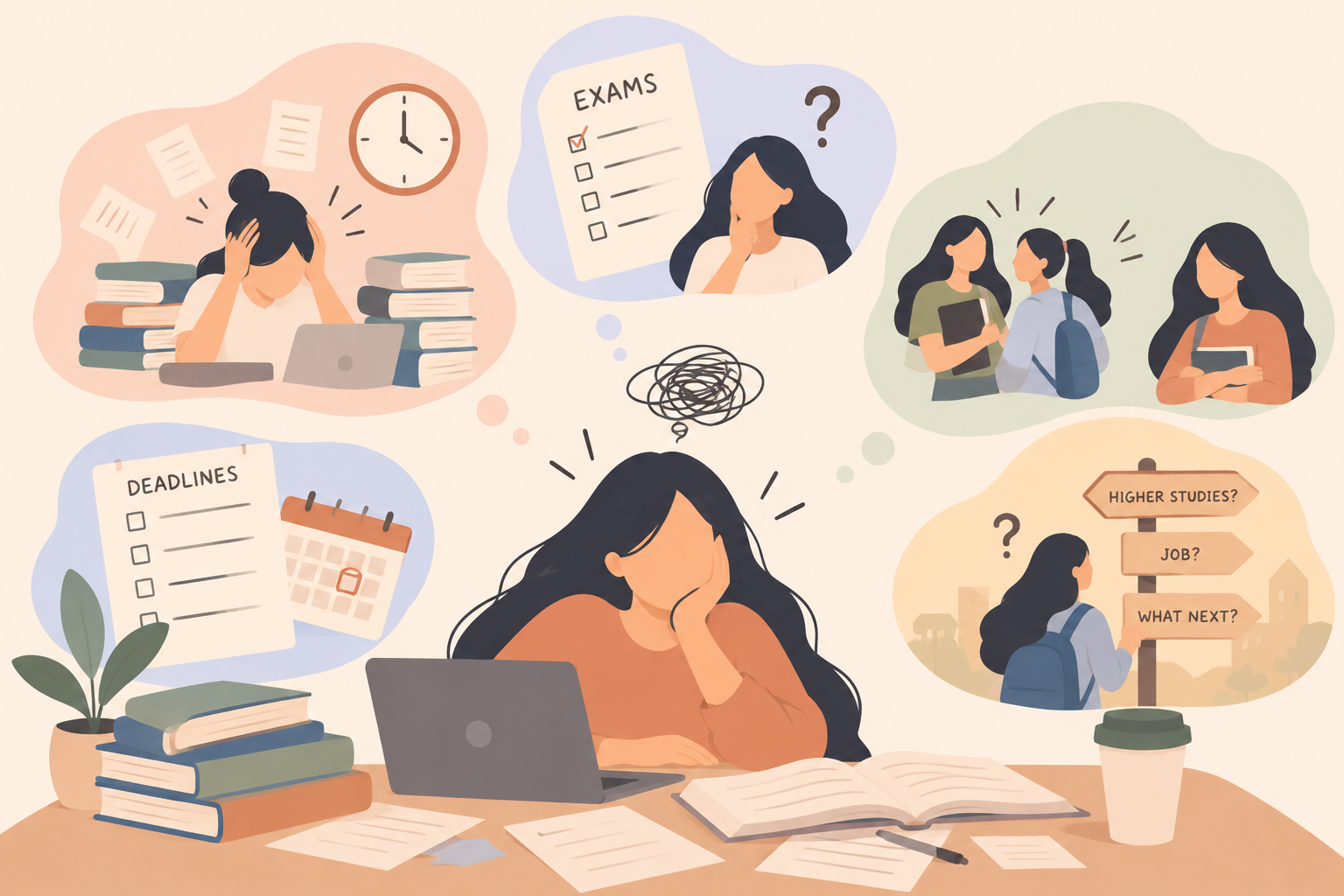
We live in today's world, where an economist can design, an artist can code, and a developer can predict trends; it has become really important for us students to become a “jack of all trades”; we are expected to study well, learn new skills, do internships, participate in activities, stay updated, and somehow also figure out what we want to do with our lives.And because of this, life sometimes feels less like a life and more like a race - a race to win and to do everything.But along the way, there is immense pressure to win and to prove our worth.And the most important part? This pressure has become so common that we have started thinking it’s normal.No! It’s not.We need to realise that winning matters, but so does our well-being.Of course, a little pressure is sometimes good, as it can push us to work harder, meet deadlines, improve ourselves, and perform under time constraints when needed. But when that pressure keeps building up, it can affect us in ways we may not even realise.How many times have you found yourself studying for hours but not actually understanding anything?You may keep checking the clock and worrying about how much is left to study. You might feel guilty when you take a break because there is always something else you should be doing. And then comes the comparison - someone scored more, someone got an internship, someone learned a new skill, someone seems to have their entire life figured out.And suddenly, you start wondering, “Am I doing enough?”If you have ever felt this way, you are definitely not alone.So, what can we actually do about it?There isn't one perfect solution.And honestly, telling a stressed student to "just relax" doesn’t work and probably makes them even more stressed. But there are a few things that can help.Start by asking yourself what is actually making you feel pressured.Is it your grades? Your parents' expectations? Competition? Fear of falling behind? Or are you simply trying to do too many things at once?Once you know what is bothering you, take things one at a time.Make a list, break your work into smaller chunks, prioritise important tasks, and focus on that. You don't have to finish everything today. And take a break whenever you feel tired, without feeling guilty about it, because rest is not wasted time.Also, sometimes, getting away from your books and your screen can help too.Go for a walk, sit outside for a while, listen to music, talk to a friend. Spend some time doing something you actually enjoy. You can also try meditation and let your mind slow down. And if you're comfortable talking about what you're going through, talk to a counsellor.Sometimes, having someone who listens without judging you can make things feel a little less overwhelming.How does Biyani College help?Biyani College values education and hard work over results. The college also provides its students with a large base of extracurricular activities, such as a sports club, drama club, poetry club, entrepreneurship club, and many more, allowing students to work on their interests as well. The college understands the role these activities play in a student’s life and also acknowledges the importance of the mental and emotional well-being of the students.Hence, the bottom line is:Your grades matter. Your career matters. Your goals matter. But you matter too.And remember:The goal is to win the race while staying true to yourself.
Does Online Counselling Actually Work?
By Nidhi Sharma
Oct 17, 2026
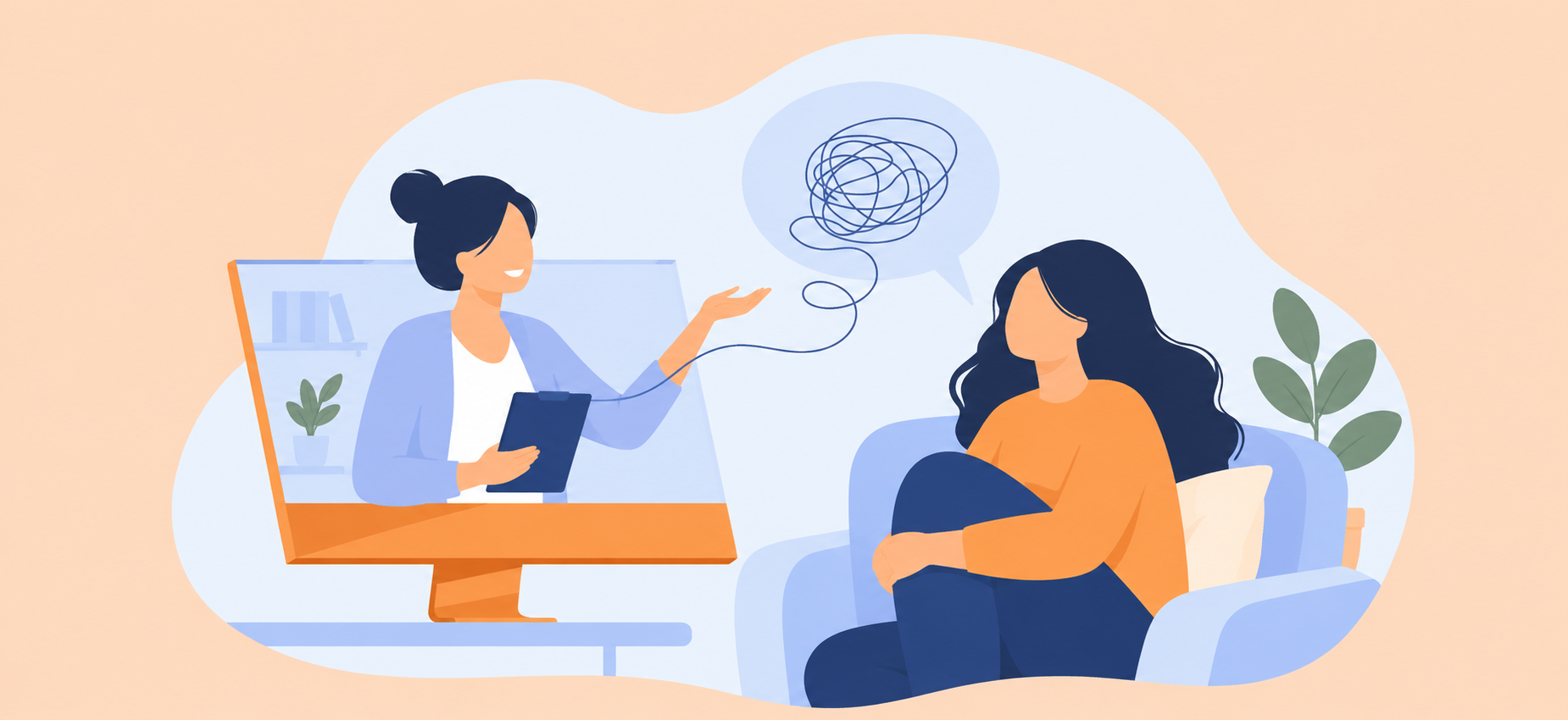
The era of “click & tap” has not only made forming connections and interacting with others possible with just one “click”, but has also made counselling and therapy accessible to us from the comfort of our homes.We can simply open a website and book an online therapy session without having to leave our comfort zone or worry about what others might think of us. But still, there remains a question: “Does Online Counselling Actually Work?” Before we answer this, we need to understand online counselling first.What is Online Counselling?Online Counselling, also known as Teletherapy or Online Therapy, involves receiving counselling sessions from a mental health professional through chat, audio calls or secure video calls.This can help students and adults who find it difficult to visit a counsellor in person because of busy schedules, long distances, privacy concerns, or a need to be in their own environment.Effectiveness of Online Therapy:Online counselling isn't just about convenience. For many people, it can make reaching out for help feel a little easier and less overwhelming.It Makes Counselling More Accessible:One of the biggest advantages of online counselling is convenience. You don't necessarily have to travel to a clinic or rearrange your entire schedule for an appointment. A stable internet connection and a private space are enough to attend a session.For students, this can make seeking help feel less complicated.Familiar Surroundings Can Feel More Comfortable:Sometimes, talking about what's bothering you is difficult enough without having to sit in an unfamiliar office. Being able to speak to a counsellor from a familiar place can help some people feel more at ease.Whether it's sitting in your room after a long day of college or finding a quiet corner at home, being in a comfortable environment may make it easier to open up and talk honestly.Can Help with Various Forms of Mental Health Issues:Studies have demonstrated that online psychological interventions can successfully treat issues such as anxiety and depression, particularly when a certain type of therapeutic structure and trained support are provided.Online counselling isn't simply talking to a person - an experienced counsellor can assist in recognising patterns, coping mechanisms, and obstacles, all based on proven techniques.Reduced Barrier for Asking for Help:Sometimes, the most difficult part is asking for help. It might not seem so big now. But by taking the first step with online counselling, you might be more willing to get help and even consider using online counselling.Less Pressure to Reveal Your Face or Identity:For some people, opening up about personal struggles can already feel difficult, and showing their face can add another layer of discomfort. Online counselling can offer more flexibility, especially when sessions are conducted through chat. In some cases, people may also be able to seek support without revealing their identity, which can make reaching out feel a little easier.It Can Be More AffordableCost can be another reason people hesitate to seek professional mental health support. Offline counselling sessions may feel expensive, especially for students or people on a limited budget. Online counselling is often more affordable, which can make professional support accessible to a wider range of people.So, Does Online Counselling Actually Work?The simple answer is yes; it can. However, online therapy isn't a magic solution for everyone or every situation. Research suggests that online counselling can be effective for several mild to moderate mental health concerns and, in some cases, can offer outcomes comparable to in-person therapy.At the same time, people experiencing severe symptoms, an immediate crisis, or situations requiring close clinical supervision may need in-person care or a higher level of professional support. Ultimately, the right approach depends on the individual's needs and circumstances. Take a therapy session Today!